分类归档 a1

通过admin

Predicting LeBron James’ next move after split from Lakers; NBA free agency winners, losers after Day 1

🏀 Five things to know Wednesday
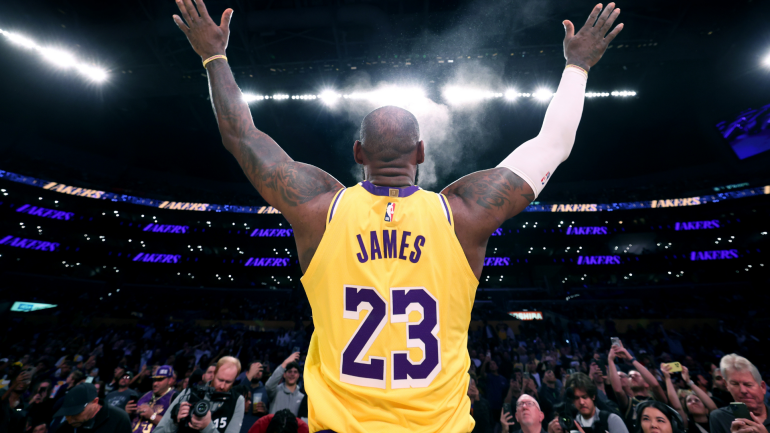
The LeBron James era is over for the Lakers. There will be no Year 9 for King James in a Lakers jersey. The biggest domino of NBA free agency thus far fell yesterday when James hit the open market and informed the team he intends to sign elsewhere. The dust is still settling on his Los Angeles legacy, but it is not too early to ponder which franchise will be fortunate enough to land his talents. The Warriors have been linked to him over the last few days and are the clear favorites to bring him aboard, but these other teams would also be logical landing spots. Not all of our NBA writers are convinced Golden State presents the most entertaining situation, but it is hard not to salivate over the idea of James, Stephen Curry, Draymond Green and Kristaps Porziņģis all teaming up in the Bay Area. Meanwhile, the Lakers are left to rebuild their identity, and their top priority is already clear. And we’ve got your free agency winners and losers.
Kawhi Leonard will return to the Raptors via trade. The NBA offseason is not just about free agent signings. An absolute blockbuster transaction between the Clippers and Raptors will send Leonard back up north seven years after he departed from Toronto. In capitalizing on Leonard’s value and securing Brandon Ingram, Gradey Dick and a host of draft picks (including unprotected first-rounders in 2031 and 2033) in return, this is a home-run move for Los Angeles. Our trade grades reflect how the Clippers came out way ahead by parting with the seven-time All-Star, who never quite lived up to expectations across his seven years with the team.
Serena Williams and Ben Shelton are out at Wimbledon. It was a short stay in the tournament for two huge American names. Neither Williams nor Shelton made it out of the opening round due to their losses Tuesday. Williams still has at least one doubles match ahead of her, but her run in the singles field is done just one match into her comeback. She fell to 20-year-old Maya Joint in three sets in her first singles match in four years. Shelton, the highest-seeded American man at Wimbledon, fell in five sets to Otto Virtanen despite entering play as a perceived threat to at least return to the quarterfinals. Those remaining in the bracket embark on second-round play today.
Kylian Mbappé kept France rolling to highlight Tuesday’s World Cup action. Three more teams are through to the Round of 16: Norway, France, and Mexico. Mbappé, again, shined as bright as any star who was in action across the trio of matches with yet another brace (his third of the tournament) in Les Bleus’ 3-0 rout of Sweden. His fifth and six goals of the World Cup tied him with Lionel Messi at the front of the Golden Boot race and placed him one goal behind Messi’s pace on the all-time tournament leaderboard. And in yesterday’s nightcap, Mexico became the second host country to send its national team to the Round of 16 with a 2-0 win over Ecuador. Is the United States next? The USMNT returns to action tonight against Bosnia and Herzegovina.
NHL free agency gets underway today. The NBA isn’t the only league that gets to have some free agency fun. While the 2026 class does not hold a candle to others in recent years, there are still a few big names that could be on the move. We ranked the top 30 free agents, including a couple of Stanley Cup champion goaltenders, ahead of what promises to be an active stanza of the offseason.
🏆 Do not miss this: Who had the best year in college sports?
Kentucky v Texas
Getty Images
There are football schools, there are basketball schools and — in only a few instances — so-called “everything schools.” In modern college athletics, the strongest brands and wealthiest athletic departments are often the ones that dominate across sports. That was very apparent during the 2025-26 academic year, which has officially come to an end.

We created a formula to determine which Power Four schools enjoyed the most success in the six biggest sports and found that one athletic department stood head and shoulders above the rest. Congratulations to Texas on putting together the best year in major college sports! Our Cody Nagel explained what set the Longhorns apart.

Nagel: “The Longhorns posted a regular-season win percentage above .750 in five of the six sports and accumulated 100 more postseason points than any other Power Four school. Texas was consistently strong across the board, but the biggest highlight came in softball, where the Longhorns won the Women’s College World Series for the second consecutive year.”
Each of the top nine schools hailed from either the SEC or Big Ten, but all four leagues were well represented in the top 25. The Big 12, in fact, dominated the No. 20 to No. 25 range:

  1. Arizona State
  2. Virginia
  3. USC
  4. Iowa State
  5. Arizona
  6. Kansas

⚾ White Sox write AL’s greatest first-half success story
Chicago White Sox v New York Yankees
Getty Images
Almost nothing has gone according to script in the American League this year. With more than 50% of regular-season games now complete, nearly all of the perceived preseason contenders are in the midst of dramatically underwhelming campaigns. Meanwhile, teams like the White Sox flipped all of those expectations on their heads.

Chicago is one of two clubs to receive an “A” grade on our MLB halfway report card thanks to an incredibly quick turnaround that nobody saw coming. Remember, it was just two years ago the White Sox set the modern record for most losses in a single season.

Here’s our Matt Snyder on this sudden surge from the South Siders:

Snyder: “After losing 121 games two years ago and 102 last season, the White Sox are not only above .500 but are fighting for a division title. That’s a monster victory for the franchise. Speaking of victories, landing Munetaka Murakami was an utter coup, Miguel Vargas is blossoming into a star and Colson Montgomery has already hit 20 home runs. There remain questions in the rotation, but this White Sox bunch is clearly ahead of schedule.”
On the other end of the spectrum, neither of the reigning ALCS participants hold a division lead through 86 games. The Blue Jays are a whopping 11 games back in the AL East while the Mariners play catch-up in baseball’s worst division, the AL West. Neither of them received passing grades.

👍👎 The best (and not-so-best) of the rest
2026 Texas Tech Spring Football Game
Getty Images
Brendan Sorsby announced he will pursue the 2027 NFL Draft rather than fight for eligibility this year.
Longtime NFL defensive lineman Calais Campbell’s brother charged in their mother’s murder.
Junior Caminero is the first player to accept a 2026 Home Run Derby invitation.
Benches cleared when Willson Contreras charged at Cade Cavalli in the Red Sox’s 8-1 loss to the Nationals.
Read the character reference letter Nick Saban submitted to the judge in Terrion Arnold’s kidnapping and armed robbery case.
Kager Knueppel, the younger brother of Kon Knueppel, will also play his college basketball at Duke.
With Tyreek Hill seemingly committed to making a comeback from injury, these teams would be perfect fits for him.
Our picks for the John Deere Classic are in.
Let’s rank some quarterbacks! Here are all of the NFL’s starters ranked by tiers, and here are the 10 best signal-caller groups in college football.
The first half of the year delivered countless unforgettable moments in the UFC. Here are the biggest highlights, a fresh look at the Fighter of the Year race and more.
Alyssa Thomas said she received death threats after her incident with Caitlin Clark and called out WNBA commissioner Cathy Engelbert.
Mark Pope aims to bring Rick Pitino back to Rupp Arena for a potential Kentucky vs. St. John’s series.
New light middleweight champion Jaron Ennis made a big climb in our Boxing Pound for Pound Rankings.
Who wins and who loses as a result of college sports’ new eligibility model?
📺 What we’re watching Wednesday
🎾 Wimbledon, second round, 6 a.m. on ESPN
⚽ World Cup: England vs. Congo DR, noon on Fox
⚾ White Sox at Orioles, 12:35 p.m. on MLB Network
⚾ Tigers at Yankees, 1:35 p.m. on Peacock
⚾ Mets at Blue Jays, 3:07 p.m. on ESPN Unlimited
⚾ Padres at Cubs, 3:30 p.m. on MLB Network
⚽ World Cup: Belgium vs. Senegal, 4 p.m. on FS1
⚽ World Cup: United States vs. Bosnia and Herzegovina, 8 p.m. on Fox
⚾ Reds at Brewers, 8:10 p.m. on MLB Network
通过admin

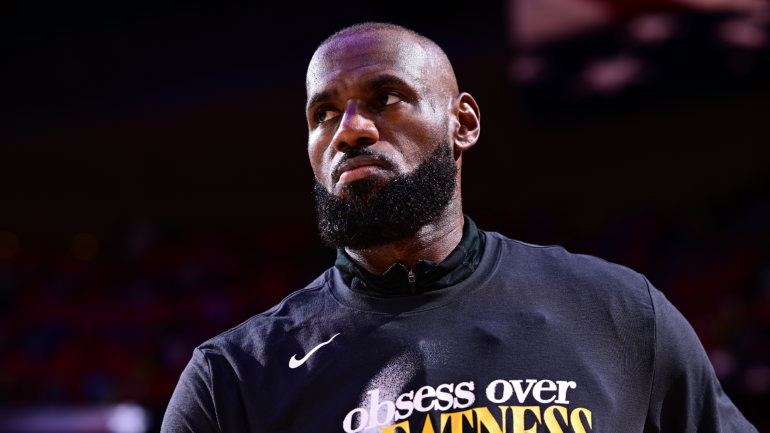
How much can your NBA team pay LeBron James next season? Complete cap salary guide with The King on the move

When LeBron James became a free agent in 2014, the entire NBA pursued him. I mean that literally. From “Return of the King,” written by Brian Windhorst and Dave McMenamin: “After midnight on July 1, 2014, Rich Paul’s phone went hot with calls and texts. Within a few hours, all thirty teams had made contact, letting him know they were interested in his client.” Everyone, and I mean everyone, wanted to employ LeBron James.

James is not the same caliber of player today that he was in 2014, but his decision in 2026 will be driven by “happiness,” not by money, according to ESPN. That theoretically opens the door to… well… everyone. Of course, money can be a driver of happiness. James knows that; he’s a billionaire. Even if he’s willing to play for cheap, he’d probably prefer to be paid appropriately for his stature. He has made max or max-adjacent salaries for 19 seasons now.

So, with James making his fourth substantial foray into free agency, let’s break down how much everyone can afford to pay him. We will be dividing the NBA’s 29 non-Laker teams into four groups: teams with cap space, teams with all or part of the non-taxpayer mid-level exception (up to $15 million or so), teams with the taxpayer mid-level exception ($6.1 million or so) and teams that can only offer the minimum ($3.9 million or so). Four quick notes before we begin:

Teams with cap space also have access to the cap room mid-level exception of around $9.4 million. So even if those teams do spend their space elsewhere, they can pivot back to James with that tool.
We are not going to directly hold a “sign-and-trade” tier because the Lakers may not have the means to facilitate one. In order for a team to sign-and-trade a player, it needs to be able to actually sign that player to the contract in question first, which means either preserving cap space until they’re ready or hanging onto their Bird Rights. The Lakers may not be willing to do either as they look to spend their space on other players. There are teams with large trade exceptions that can absorb James at high salaries, but given the complications here, we aren’t going to cover them specifically. Otherwise, all you really need to know on this front is that teams acquiring players through sign-and-trades are hard-capped at the first apron, so you’re mostly dealing with cap space and mid-level teams… at least at first. Which leads us to our next point:
Spending power in the NBA is very fluid. The opening bell of free agency rings at 6 p.m. ET. Money is going to start flying around almost immediately. This information will be accurate as of Tuesday afternoon, but it will change quickly. Remember, though, that teams can usually create financial flexibility if they absolutely need it. The waive-and-stretch provision exists. Teams can trade into the mid-level exception now. There are more savings mechanisms than ever, so if James tells any team, “you’re offering X, but I need Y,” there are usually going to be paths to getting there if the team is motivated enough. Sure enough, the Cavaliers traded Jarrett Jack to the Nets in 2014 to clear the space they’d need to sign James for the max.
We are only covering spending power here. Therefore, whether signing James would push the team into the luxury tax will be irrelevant for our purposes. Frankly, the amount of money a team stands to gain by employing James would probably offset or exceed any tax implications of signing him.
With all of that in mind, let’s begin.

The cap space teams
Teams: Nets, Pistons, Bulls, Clippers

I’ll start with the obvious question: Is there a world in which free agency goes poorly enough for the Lakers that they circle back? I think the answer is no… but say they give a restricted free agent a big offer sheet and it is matched. They’ll be sitting on a mountain of cap space a week into July, when most of the free agents presumably will be gone. Maybe there’s a way to mend fences for enough money. We won’t consider that concept too closely here, though. Let’s talk about the four other cap space teams.

The Nets still haven’t officially made the Julius Randle trade yet. They are seemingly delaying it in order to maximize their cap space. They can still get just above $40 million. They’re not exactly winners, but if James wants to try living in New York and making a lot of money, I suppose they’re an option.
The Pistons are the lone contenders in this tier. They re-signed Kevin Huerter, but that can go into the room exception if needed. Detroit can create more than $34 million in space if needed, but doing so means waiving Duncan Robinson and Tolu Smith. Keeping those two takes the Pistons below $21 million in space. We’re also assuming that the Pistons keep Jalen Duren’s cap hold on the books, but if they let him leave on an offer sheet elsewhere, that opens up more than $19 million in spending power. The Pistons could also wind up operating above the cap if they want to retain some of their own players. In that case, they’ll have access to the full mid-level exception.
The Bulls are looking at around $33 million in cap space if they want it, and they have been linked to Norman Powell on a big, short-term deal with it.
The Clippers are the only other local option for James if he wants to remain in Los Angeles. We’ll have to watch for the specifics of the Kawhi Leonard trade, but for now, if they waive Kris Dunn, they can get to around $26 million in cap space.
The full mid-level teams
Teams: Hawks, Celtics, Hornets, Mavericks, Warriors, Pacers, Grizzlies, Heat, Bucks, Pelicans, 76ers, Trail Blazers, Kings, Spurs, Wizards

This is our biggest group, so let’s just dive right in.

Look… if the decision is happiness-based… it’s not going to be the Kings, the Bucks, the Grizzlies or the Pelicans. Bad teams in small markets aren’t getting James. Just to cover our bases, though, the Kings technically can’t offer the full mid-level exception yet. They’re over the first apron. But they’re presumably going to waive and stretch the partially guaranteed DeMar DeRozan, freeing up around $22 million. That takes care of that. The Pelicans have a bit less than $14 million in first apron room as of now, and the Grizzlies and Bucks have more than enough to give James the full mid-level.
Let’s lump together the genuine contenders with the full mid-level amount. We have two, and they’re interesting for different reasons. The Celtics have around $22 million in first apron space. That’s enough to give James his $15 million or so. But Boston is among his greatest rivals, and unlike Golden State, the Celtics can’t sell him on uniting with a fellow all-timer like Stephen Curry. Still, if he wants to win, Boston is a real option. The other, of course, is San Antonio. Even after re-signing Harrison Barnes and Julian Champagnie, the Spurs can throw the full mid-level exception at James. He could compete for a championship and officially hand the “face of the league” baton to Victor Wembanyama. He has a long-standing respect for Gregg Popovich, who is no longer coaching but still in the organization. This is one of the most sensible options on the board… if he’s willing to live in San Antonio.
The Warriors get their own blurb. We’ve written about this fit extensively. The exact amount Golden State has to offer will depend on how much is needed to retain Draymond Green and whether or not the Warriors can shed a mid-sized salary (Moses Moody makes the most sense), but in all likelihood, it will be the full mid-level exception. Right now, you’d have to categorize the Warriors as the frontrunners given all of the reporting behind their interest.
Two notable contenders can offer chunks of the full mid-level, but not the whole thing. The Pacers have just under $10 million in first apron room. I doubt James would go to Indiana, but that would be a chance for him to contend. The other team in this bucket would be the Heat. Miami has around $18 million in first apron space right now but, with only 10 players under contract, still needs to fill out at least four roster spots. The Heat could therefore offer somewhere in the $11-12 million range with minimums filling out the rest of their roster. Pat Riley has said he would “leave the key under the doormat” for James should he ever want to return to Miami, and the Heat just acquired Giannis Antetokounmpo in a win-now move.
They’re not a contending-caliber team, and they’ve cleared out a lot of people that James had relationships with (most notably Jason Kidd and Nico Harrison), but the Mavericks can still offer the full mid-level exception to reunite James with Kyrie Irving. Should James want to reunite with Anthony Davis in Washington (if the Warriors can’t secure a trade for him), the Wizards also have enough first apron space to offer the full mid-level exception.
I’ll just call these the “no notable connections or notes, but have the full mid-level” group of teams: the Blazers (close to the Nike campus at least!), the Hawks (Atlanta is a well-liked city among NBA players), the Hornets (they could technically pay him much, much more thanks to the $40 million trade exception they got for LaMelo Ball, but we’re not covering sign-and-trades here, so mid-level it is) and the 76ers (Rich Paul met with them on James’ behalf in 2018, but that obviously didn’t come to fruition).
The tax mid-level teams
Teams: Rockets, Timberwolves, Knicks, Magic, Suns, Raptors, Jazz

We’re starting to whittle the field down here. Some of these teams are pretty straightforward. Others are more complicated.

The Rockets and Jazz are more of a “TBD” than anything else. They both have more than enough room under the first apron to offer James the full mid-level exception, but wouldn’t dare create a first-apron hard cap while their notable restricted free agents, Tari Eason and Walker Kessler, respectively, are sitting on the market. That would open the door for another team to make them an offer they couldn’t legally match. The tax mid-level triggers a second-apron hard cap, but that one is high enough that Utah and Houston could still feel confident in their ability to keep their restricted free agents.
The Raptors are a “TBD” for a different reason. We’re waiting on the structure of their trade for Kawhi Leonard. If it’s just Brandon Ingram and Gradey Dick going to Los Angeles, then the Raptors have a first-apron hard cap and are therefore basically only able to offer the minimum without further moves. Jake Fischer is reporting that no other players are involved. If they expand the trade to a third team or convince the Clippers to take on another minimum-salary player or two, they can send out more money than they take back with Leonard. That instead creates a second-apron hard cap, which would be much more manageable for Toronto. In that world, the Raptors could use the taxpayer mid-level exception to pursue James or someone else.
The Suns can offer the full taxpayer mid-level exception, and with their roster essentially full, wouldn’t have to worry about filling out the team afterward. They have been linked to guards with that tool, but I imagine they would make an exception for James. Given their standing in the Western Conference, though, we’ll call this unlikely.
One way or another, it seems as though the Timberwolves will get to the point where they can use the taxpayer mid-level exception. Right now, they have around $10 million in second apron space, but four roster spots to fill. But their LaMelo Ball trade is not yet official, and the hope would be that they could redirect Josh Green and his $14.7 million salary elsewhere to clear out a bit more space. If absolutely necessary, the Timberwolves could waive and stretch Green, though given how tight their long-term finances are, that would be a move best avoided unless absolutely necessary.
The Magic have a bit less than $10 million in second apron space with three roster spots to fill. If they fill the first two with veteran minimums, they’d have a portion of the tax mid-level to offer. If one of those slots goes to a rookie minimum, they could potentially use the full tax mid-level.
The Knicks are in a similar boat as the Magic. They have just under $9 million in second apron space with three empty roster spots. Sign two rookie minimums and there’s still around $6 million left for a taxpayer mid-level contract. In the likelier event that they sign two veteran minimums, they’d barely be able to go above the minimum to sign James. They just won a championship. The appeal here likely would have been trying to be the savior who ended New York’s drought. The window for this fit seems to have passed.

通过admin

How much can your NBA team pay LeBron James next season? Complete cap salary guide with The King on the move

When LeBron James became a free agent in 2014, the entire NBA pursued him. I mean that literally. From “Return of the King,” written by Brian Windhorst and Dave McMenamin: “After midnight on July 1, 2014, Rich Paul’s phone went hot with calls and texts. Within a few hours, all thirty teams had made contact, letting him know they were interested in his client.” Everyone, and I mean everyone, wanted to employ LeBron James.

James is not the same caliber of player today that he was in 2014, but his decision in 2026 will be driven by “happiness,” not by money, according to ESPN. That theoretically opens the door to… well… everyone. Of course, money can be a driver of happiness. James knows that; he’s a billionaire. Even if he’s willing to play for cheap, he’d probably prefer to be paid appropriately for his stature. He has made max or max-adjacent salaries for 19 seasons now.

So, with James making his fourth substantial foray into free agency, let’s break down how much everyone can afford to pay him. We will be dividing the NBA’s 29 non-Laker teams into four groups: teams with cap space, teams with all or part of the non-taxpayer mid-level exception (up to $15 million or so), teams with the taxpayer mid-level exception ($6.1 million or so) and teams that can only offer the minimum ($3.9 million or so). Four quick notes before we begin:

Teams with cap space also have access to the cap room mid-level exception of around $9.4 million. So even if those teams do spend their space elsewhere, they can pivot back to James with that tool.
We are not going to directly hold a “sign-and-trade” tier because the Lakers may not have the means to facilitate one. In order for a team to sign-and-trade a player, it needs to be able to actually sign that player to the contract in question first, which means either preserving cap space until they’re ready or hanging onto their Bird Rights. The Lakers may not be willing to do either as they look to spend their space on other players. There are teams with large trade exceptions that can absorb James at high salaries, but given the complications here, we aren’t going to cover them specifically. Otherwise, all you really need to know on this front is that teams acquiring players through sign-and-trades are hard-capped at the first apron, so you’re mostly dealing with cap space and mid-level teams… at least at first. Which leads us to our next point:
Spending power in the NBA is very fluid. The opening bell of free agency rings at 6 p.m. ET. Money is going to start flying around almost immediately. This information will be accurate as of Tuesday afternoon, but it will change quickly. Remember, though, that teams can usually create financial flexibility if they absolutely need it. The waive-and-stretch provision exists. Teams can trade into the mid-level exception now. There are more savings mechanisms than ever, so if James tells any team, “you’re offering X, but I need Y,” there are usually going to be paths to getting there if the team is motivated enough. Sure enough, the Cavaliers traded Jarrett Jack to the Nets in 2014 to clear the space they’d need to sign James for the max.
We are only covering spending power here. Therefore, whether signing James would push the team into the luxury tax will be irrelevant for our purposes. Frankly, the amount of money a team stands to gain by employing James would probably offset or exceed any tax implications of signing him.
With all of that in mind, let’s begin.

The cap space teams
Teams: Nets, Pistons, Bulls, Clippers

I’ll start with the obvious question: Is there a world in which free agency goes poorly enough for the Lakers that they circle back? I think the answer is no… but say they give a restricted free agent a big offer sheet and it is matched. They’ll be sitting on a mountain of cap space a week into July, when most of the free agents presumably will be gone. Maybe there’s a way to mend fences for enough money. We won’t consider that concept too closely here, though. Let’s talk about the four other cap space teams.

The Nets still haven’t officially made the Julius Randle trade yet. They are seemingly delaying it in order to maximize their cap space. They can still get just above $40 million. They’re not exactly winners, but if James wants to try living in New York and making a lot of money, I suppose they’re an option.
The Pistons are the lone contenders in this tier. They re-signed Kevin Huerter, but that can go into the room exception if needed. Detroit can create more than $34 million in space if needed, but doing so means waiving Duncan Robinson and Tolu Smith. Keeping those two takes the Pistons below $21 million in space. We’re also assuming that the Pistons keep Jalen Duren’s cap hold on the books, but if they let him leave on an offer sheet elsewhere, that opens up more than $19 million in spending power. The Pistons could also wind up operating above the cap if they want to retain some of their own players. In that case, they’ll have access to the full mid-level exception.
The Bulls are looking at around $33 million in cap space if they want it, and they have been linked to Norman Powell on a big, short-term deal with it.
The Clippers are the only other local option for James if he wants to remain in Los Angeles. We’ll have to watch for the specifics of the Kawhi Leonard trade, but for now, if they waive Kris Dunn, they can get to around $26 million in cap space.
The full mid-level teams
Teams: Hawks, Celtics, Hornets, Mavericks, Warriors, Pacers, Grizzlies, Heat, Bucks, Pelicans, 76ers, Trail Blazers, Kings, Spurs, Wizards

This is our biggest group, so let’s just dive right in.

Look… if the decision is happiness-based… it’s not going to be the Kings, the Bucks, the Grizzlies or the Pelicans. Bad teams in small markets aren’t getting James. Just to cover our bases, though, the Kings technically can’t offer the full mid-level exception yet. They’re over the first apron. But they’re presumably going to waive and stretch the partially guaranteed DeMar DeRozan, freeing up around $22 million. That takes care of that. The Pelicans have a bit less than $14 million in first apron room as of now, and the Grizzlies and Bucks have more than enough to give James the full mid-level.
Let’s lump together the genuine contenders with the full mid-level amount. We have two, and they’re interesting for different reasons. The Celtics have around $22 million in first apron space. That’s enough to give James his $15 million or so. But Boston is among his greatest rivals, and unlike Golden State, the Celtics can’t sell him on uniting with a fellow all-timer like Stephen Curry. Still, if he wants to win, Boston is a real option. The other, of course, is San Antonio. Even after re-signing Harrison Barnes and Julian Champagnie, the Spurs can throw the full mid-level exception at James. He could compete for a championship and officially hand the “face of the league” baton to Victor Wembanyama. He has a long-standing respect for Gregg Popovich, who is no longer coaching but still in the organization. This is one of the most sensible options on the board… if he’s willing to live in San Antonio.
The Warriors get their own blurb. We’ve written about this fit extensively. The exact amount Golden State has to offer will depend on how much is needed to retain Draymond Green and whether or not the Warriors can shed a mid-sized salary (Moses Moody makes the most sense), but in all likelihood, it will be the full mid-level exception. Right now, you’d have to categorize the Warriors as the frontrunners given all of the reporting behind their interest.
Two notable contenders can offer chunks of the full mid-level, but not the whole thing. The Pacers have just under $10 million in first apron room. I doubt James would go to Indiana, but that would be a chance for him to contend. The other team in this bucket would be the Heat. Miami has around $18 million in first apron space right now but, with only 10 players under contract, still needs to fill out at least four roster spots. The Heat could therefore offer somewhere in the $11-12 million range with minimums filling out the rest of their roster. Pat Riley has said he would “leave the key under the doormat” for James should he ever want to return to Miami, and the Heat just acquired Giannis Antetokounmpo in a win-now move.
They’re not a contending-caliber team, and they’ve cleared out a lot of people that James had relationships with (most notably Jason Kidd and Nico Harrison), but the Mavericks can still offer the full mid-level exception to reunite James with Kyrie Irving. Should James want to reunite with Anthony Davis in Washington (if the Warriors can’t secure a trade for him), the Wizards also have enough first apron space to offer the full mid-level exception.
I’ll just call these the “no notable connections or notes, but have the full mid-level” group of teams: the Blazers (close to the Nike campus at least!), the Hawks (Atlanta is a well-liked city among NBA players), the Hornets (they could technically pay him much, much more thanks to the $40 million trade exception they got for LaMelo Ball, but we’re not covering sign-and-trades here, so mid-level it is) and the 76ers (Rich Paul met with them on James’ behalf in 2018, but that obviously didn’t come to fruition).
The tax mid-level teams
Teams: Rockets, Timberwolves, Knicks, Magic, Suns, Raptors, Jazz

We’re starting to whittle the field down here. Some of these teams are pretty straightforward. Others are more complicated.

The Rockets and Jazz are more of a “TBD” than anything else. They both have more than enough room under the first apron to offer James the full mid-level exception, but wouldn’t dare create a first-apron hard cap while their notable restricted free agents, Tari Eason and Walker Kessler, respectively, are sitting on the market. That would open the door for another team to make them an offer they couldn’t legally match. The tax mid-level triggers a second-apron hard cap, but that one is high enough that Utah and Houston could still feel confident in their ability to keep their restricted free agents.
The Raptors are a “TBD” for a different reason. We’re waiting on the structure of their trade for Kawhi Leonard. If it’s just Brandon Ingram and Gradey Dick going to Los Angeles, then the Raptors have a first-apron hard cap and are therefore basically only able to offer the minimum without further moves. Jake Fischer is reporting that no other players are involved. If they expand the trade to a third team or convince the Clippers to take on another minimum-salary player or two, they can send out more money than they take back with Leonard. That instead creates a second-apron hard cap, which would be much more manageable for Toronto. In that world, the Raptors could use the taxpayer mid-level exception to pursue James or someone else.
The Suns can offer the full taxpayer mid-level exception, and with their roster essentially full, wouldn’t have to worry about filling out the team afterward. They have been linked to guards with that tool, but I imagine they would make an exception for James. Given their standing in the Western Conference, though, we’ll call this unlikely.
One way or another, it seems as though the Timberwolves will get to the point where they can use the taxpayer mid-level exception. Right now, they have around $10 million in second apron space, but four roster spots to fill. But their LaMelo Ball trade is not yet official, and the hope would be that they could redirect Josh Green and his $14.7 million salary elsewhere to clear out a bit more space. If absolutely necessary, the Timberwolves could waive and stretch Green, though given how tight their long-term finances are, that would be a move best avoided unless absolutely necessary.
The Magic have a bit less than $10 million in second apron space with three roster spots to fill. If they fill the first two with veteran minimums, they’d have a portion of the tax mid-level to offer. If one of those slots goes to a rookie minimum, they could potentially use the full tax mid-level.
The Knicks are in a similar boat as the Magic. They have just under $9 million in second apron space with three empty roster spots. Sign two rookie minimums and there’s still around $6 million left for a taxpayer mid-level contract. In the likelier event that they sign two veteran minimums, they’d barely be able to go above the minimum to sign James. They just won a championship. The appeal here likely would have been trying to be the savior who ended New York’s drought. The window for this fit seems to have passed.

通过admin

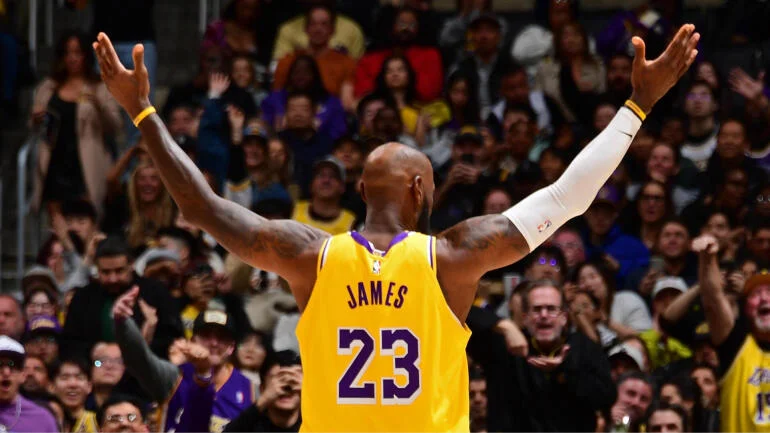
What’s LeBron James’ Lakers legacy? His jersey should go in the rafters, but he didn’t do enough for a statue

We don’t yet know where LeBron James will play his next NBA game. We do know that it won’t be with the Lakers. His time in Los Angeles is finished after eight seasons.

I was on air when this news broke, and it wasn’t long before the legacy question took over the segment. How will LeBron’s time with the Lakers be remembered? Did he do enough for a statue? For his No. 23 jersey to be pulled up into the rafters?

For me, the jersey retirement is a given. It’s happening. But he’s not a statue guy. Not in that franchise. The bar is too high with the six statues Lakers being Kareem, Magic, Kobe, Shaq, Elgin Baylor and Jerry West. Of those names, only Kareem and Shaq ever played for another franchise, and they won a total of eight championships in the purple and gold. The rest were Laker lifers. You will never think of another franchise when you see their name.

For LeBron, the Lakers were the third and, to date, most insignificant stop on his long NBA journey. He will never do anything to exceed his legacy in Cleveland. He will never win more championships with one franchise than he did with the Heat. His impact on the Lakers, frankly, wasn’t that much more than Anthony Davis, allowing for the fact that Davis never would’ve come without LeBron, who did revitalize the Lakers as a preeminent destination. That was important in coming out of the post-Kobe haze.

All that said, LeBron accomplished more with the Lakers than anyone could have reasonably expected, even if it never really felt like a seismic impact akin to his Miami Decision or Cleveland homecoming. He was 35 when he went to L.A. The thought was he would play out that first and last contract and walk off into a Hollywood ending. Instead, he stayed, and played at an All-NBA level, for nearly a decade. He became the all-time leading scorer in a Lakers uniform. He won a championship in a Lakers uniform.

A bubble championship. But a championship nonetheless.

Without the benefit of years to look back on his Lakers tenure with proper perspective, it feels, in the moment, like there are really only two seasons to regret from LeBron’s eight in Los Angeles.

The failed back-to-back in 2021
We all talk about Rob Pelinka letting Alex Caruso and, to a lesser degree, Kentavious Caldwell-Pope get away from the 2020 title team, but they were still with the Lakers that next season, and having picked up Sixth Man of the Year Montrezl Harrell to replace the departed Dwight Howard, they were sitting pretty in the No. 3 seed in the last month of the season with every reason to believe they could make a run at back-to-back titles.

Then came March 20, 2021, when Lakers fans will tell you Solomon Hill deliberately dove into LeBron’s legs. It isn’t even close to true. LeBron lost the ball and Hill was going for it and the mechanics of the interaction simply led to Hill crashing into LeBron’s lower half. Nonetheless is was a massive blow to the Lakers’ season.

LeBron wound up missing the next five weeks with an ankle injury he maintains he has never fully recovered from. In that time, the Lakers dropped from the No. 3 seed to the play-in tournament.

Still, the Lakers wound up leading the Phoenix Suns 2-1 in their first-round series before Anthony Davis suffered a groin injury in the first half of Game 4. Davis missed Game 5 and only managed five minutes in Game 6 before pulling the plug. The Lakers lost all three games after the Davis injury to drop the series to a Suns team that made it to the Finals.

That was a championship Lakers team, and equally important it was a wide-open championship race that the Milwaukee Bucks wound up winning by the length of Kevin Durant’s big toe. LeBron’s injury sunk L.A’s playoff seed. The Davis injury sunk their season. And after that, Caruso and Caldwell-Pope were discarded, and the Lakers were never the same kind of threat.

The late-season 2026 injuries
This past year’s Lakers almost certainly weren’t going to win the title or probably even make the Finals. Having to go through Victor Wembanyama or the Oklahoma City Thunder with Deandre Ayton as your starting center was a bridge too far. That said, for LeBron to miss out on the opportunity to find out what a playoff run alongside a fully healthy Luka Dončić and Austin Reaves could look like will forever be a shame.

The Lakers were the hottest team in basketball when Dončić and Reaves both went down in a loss to Oklahoma City on March 31 with just five games left in the season. They had won 17 of their previous 19 games. The defense was inspired. LeBron was clicking as a willing and overly able supporter of Dončić.

通过admin

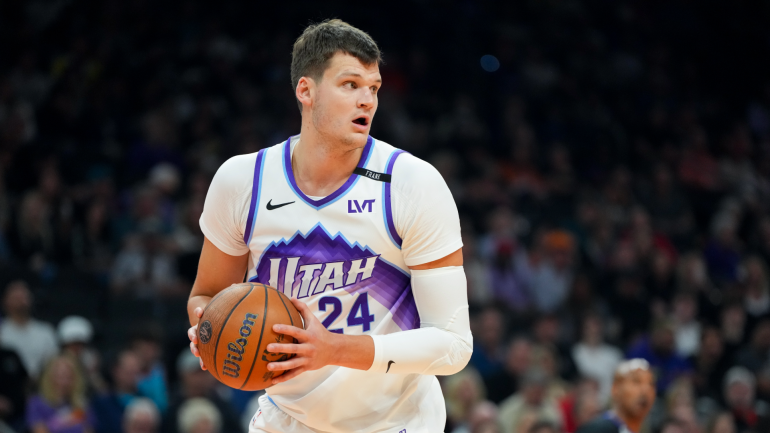
Lakers get C+ in massive, albeit necessary, overpay; Jazz play it perfectly

The Los Angeles Lakers are trading for Utah Jazz restricted free-agent center Walker Kessler to pair with Luka Dončić, according to ESPN. Kessler is expected to sign a four-year, $130 million deal with Los Angeles.

The Jazz are reportedly getting back unprotected first-round picks in 2031 and 2033 and first-round swaps in 2028 and 2030.

The Lakers created a massive hole at center the moment they traded for Dončić. While the deal itself was a home run, it cost them Anthony Davis, and since his only backup at the time was Jaxson Hayes, they had little size to work with immediately after completing the deal. They acted swiftly at the trade deadline to pursue a long-term big man, trading several draft assets to the Charlotte Hornets in exchange for Mark Williams, but once they got a look at Williams up close in his physical exam, they elected to nix the deal.

Last offseason, they signed Deandre Ayton, hoping that the former No. 1 overall pick could be their center of the future. While Ayton improved throughout the season, his inconsistent defense, rebounding and effort made him more of a stopgap than a true solution. With the potential to create genuine max cap space this offseason, the Lakers made it their top priority to find a big to pair with Dončić.

In Kessler, the Lakers are taking a chance on a player they have been linked to for several years now. Kessler is, statistically, one of the most dominant rim-protectors in the NBA. He is an elite offensive rebounder as well, and while the volume is tiny, there have at least been flashes of his potential as a 3-point shooter. He is offensively limited, but is going from a Jazz team that has largely never had strong veteran point guards to a Laker team led by Dončić. He has room to grow on that end of the floor, though his 54.5% shooting from the free-throw line is a significant red flag.

The Jazz, meanwhile, are about to turn a corner from perpetual rebuilder to possible Western Conference contender. However, after re-signing Lauri Markkanen to a max contract in the 2024 offseason and then acquiring Jaren Jackson Jr. at the trade deadline, they have quite a bit of money invested in their front court. Couple those investments with a rookie extension for Keyonte George, who is now eligible for one, and the Utah roster was about to get pretty expensive if they kept Kessler.

team logo
Lakers: C+
Lakers had to make the deal, but paid the price to do so.
This is a huge commitment to Kessler and shows the belief the Lakers have in him as the ideal center to pair with their star backcourt of Luka Dončić and Austin Reaves. The Lakers were desperate to land the kind of center Dončić has been clamoring for since he arrived and they paid a hefty price to make it happen.

In a vacuum, $130 million, two unprotected firsts and two pick swaps is a lot for Walker Kessler. I am skeptical there’s much more of a ceiling for him than what we’ve already seen, and when you add in the injury issues, there is some real risk here for Los Angeles. A lot of people will see that and grade this even more poorly than I am, but I can at least see the vision (and the spin) from the Lakers’ side.

That said, the best way to explain this for the Lakers is to view it in combination with the Dončić trade. Now, the assets you spent all make sense. They were able to acquire Dončić without having to expend much of any draft capital, so to keep him happy and get him his preferred center, it’s fine to overpay. There was real pressure on L.A. to get Kessler (or Jalen Duren, who was even less available as a restricted free agent in Detroit) and they weren’t about to go through another summer trying to paper over the hole in their frontcourt.

On the court, the fit makes sense. Kessler isn’t the bouncy athlete that Dončić loved playing with in Dereck Lively II, but a strong screener and big lob target who doesn’t need (or even want) the ball in any other scenario is the ideal offensive pairing for Luka — and Austin Reaves. Defensively, the Lakers desperately need a rim protector to anchor things in the paint, given the limitations of their backcourt, and Kessler will give them that.

The task for J.J. Redick is optimizing the Lakers’ defensive strategy to maximize Kessler’s abilities on that end. Expect a heavy dose of drop coverage to keep Kessler near the rim, where he’s most effective, and the Lakers will need to figure out how to scramble coverages and be crisp with switching and communicating to keep him close to the paint.

The problem for the Lakers? Given how much money they’ve now committed to Dončić, Reaves and Kessler, that trio has to be good enough to win a championship with filler around them. They’ve exhausted their resources to put this group together and there won’t be many opportunities to add high-end talent beyond that trio.

Rob Pelinka is now all-in on this group and the pressure is on to bring an 18th title to L.A. with this core. They will need those three to hit their absolute ceilings to make that happen, and color me skeptical that this is a roster good enough to deliver.

team logo
Jazz: A
Utah continues stockpiling draft picks in perfectly played negotiations.
The Jazz played this incredibly well — with an assist from the Detroit Pistons. They set their line with Kessler in extension talks and didn’t budge, and with the Pistons making it clear they were going to match anything on Jalen Duren as well, the Lakers had to pay big to prevent Utah from doing the same. Kessler had been in trade rumors for more than a year and the Jazz never had to take a discount to move off of him — or sign him to a deal they didn’t want.

Getting two unprotected firsts way down the road in 2031 and 2033 is big. While the Lakers tend to just roll from one star to the next, those are the most valuable of L.A.’s available picks. Utah keeps stockpiling quality draft assets, with an incoming first-round pick or swap rights in six of the next seven drafts — 2032 is the only one without. Swaps can be a bit of fool’s gold, but they are still valuable trade assets and this deal opens up more avenues for Utah to acquire players both through the draft and in trades.

On the court, the Jazz will take a hit, which is why I don’t give this a full A+. There isn’t an obvious pivot away from Kessler on the market after the recent run on bigs, and while they created some insurance by re-signing Jusuf Nurkić, they will miss Kessler’s rebounding and rim protection. We’ll see some small-ball lineups with Jaren Jackson Jr. at the five and the Jazz will likely sign another center to add depth, but for a team planning on taking a leap next year, losing Kessler will lower their ceiling for 2025-26.

That said, even if they’re ready to take a step forward now, this is still a team thinking long-term. They can keep evaluating their roster and figure out the best possible fit for their young core, which now features No. 2 overall draft pick Darryn Peterson, and have the ammunition to be aggressive when an opportunity presents itself to add a big man in the future.

通过admin

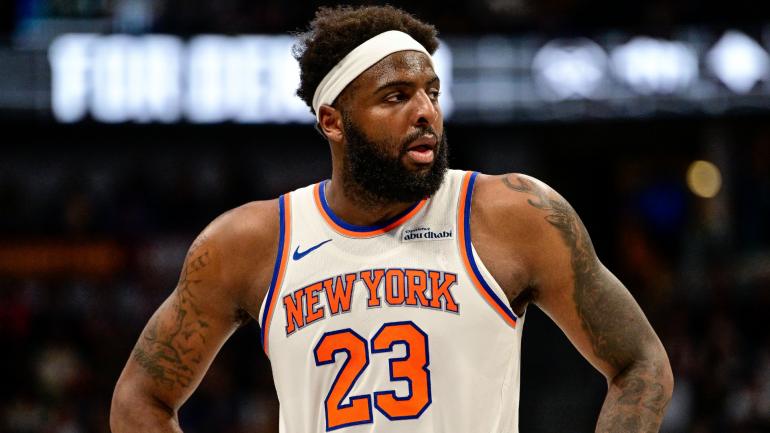
With Mitchell Robinson addition, Celtics fill biggest hole — and weaken Knicks

Remember when Mitchell Robinson terrorized the Boston Celtics in the 2025 playoffs? Remember what a force he was on defense? The city of New York sure does.

You know what was cool? When Mitchell Robinson guarded all five Celtics on a possession in a closeout playoff game. pic.twitter.com/R6qEfBHFH8

— Dan Devine (@YourManDevine) June 30, 2026
Robinson was everywhere in that series. In his 124 minutes, the New York Knicks outscored Boston by 18.1 points per 100 possessions and had an offensive rebounding rate of 40.2%. The Celtics surely remember this, but not nearly as fondly.

Boston didn’t get a rematch with New York this season, as it blew a 3-1 lead against the Philadelphia 76ers in the first round. If the Celtics face the reigning champs in next year’s playoffs, though, Robinson will be on their side. The free agent has agreed to a three-year, $47.4 million contract with Boston, including a player option in Year 3, per ESPN.

What the Celtics are getting
player headshot
team logo
Mitchell Robinson
BOS • C
PPG
5.7
RPG
8.8
BPG
1.17
View Profile
For the Celtics, this is a home-run signing. At his best, Robinson is a genuine game-changer. A 7-footer with a 7-foot-4 wingspan, he is a literally massive deterrent in the paint and will give Boston the vertical spacing it hasn’t had since the departure of Robert Williams III three years ago. Aside from Steven Adams, no one on the planet is a bigger difference-maker on the offensive glass.

Is there risk here? Sure: Robinson has had multiple ankle surgeries, and, in the two seasons that preceded the Knicks’ title run, played a total of 48 regular-season games. He hasn’t played in both sides of a back-to-back since the 2023-24 season, and, even though he’s started 19 games since then, he’s cleared the 30-minute mark just twice. One cannot assume that, when it’s needed most, he will be available and have the mobility that he showed in that 2025 series.

Without the durability concerns, though, there’s no chance the Celtics could have nabbed Robinson with the mid-level exception. If they have to cap his minutes and/or hold him out of back-to-backs, they’ll accept that, just like they’ll accept his awful free-throw shooting. As presently constructed, they don’t need that many minutes out of him during the regular season, anyway. They just won 56 games with Neemias Queta and Luka Garza playing the lion’s share of the minutes at the 5 spot, and both are still under contract.

After Joel Embiid bullied Boston for three straight games and ended its previously magical season, Brad Stevens’ front office knew it had to beef up its frontline for the playoffs. It has done that as elegantly as possible, without trading away any players or picks. And while other big men could have theoretically helped the Celtics gain some ground on New York, Robinson is the only one whose signing directly weakens the team they’re chasing. Regardless of what happens with Jaylen Brown, they should feel good about this.

What the Knicks are losing
The Knicks now have to worry about Robinson harassing Karl-Anthony Towns (or cheating off Josh Hart) and generating extra possessions for Boston in a potential playoff series. They also have a hole at backup 5, and, given that owner James Dolan does not want the payroll to exceed the second apron, limited resources to fill it. Earlier on Wednesday, Ariel Hukporti agreed to a deal with the Sixers, per ESPN.

According to The Stein Line, New York sees Kevon Looney as a potential replacement on a minimum contract. He is a free agent, and he was with the Golden State Warriors for all of Mike Brown’s tenure there. Andre Drummond, Jaxson Hayes and Nick Richards are still available, too.

If the Knicks are aiming higher, then they’ll need to make a trade. Would the Charlotte Hornets, who have an abundance of young bigs, be willing to part with Moussa Diabaté? Would the New Orleans Pelicans move Yves Missi? Maybe there’s a deal to be done if New York is willing to part with Deuce McBride or the little draft capital it has left. (It can trade its 2033 first-round pick and can swap its 2030 and 2032 picks.)

For the Knicks, this stings not just because they drafted Robinson in the second round in 2018 and was by far their longest-tenured player. (Nobody else was there for the first year of the Tom Thibodeau era, let alone the relatively brief David Fizdale era and the extremely brief Mike Miller era.) It stings not just because Robinson played a significant role in ending their 53-year title drought and rebounded a missed free throw in crunch time in the clincher. It stings because it was avoidable.

If Dolan were simply willing to go into the second apron, then New York could have offered Robinson the exact same contract he got from Boston. Instead, Dolan’s mandate created an opportunity for the Celtics to address their most pressing weakness and meaningfully improve their chances of avenging their 2025 loss. Boston had to pounce on it.

通过admin

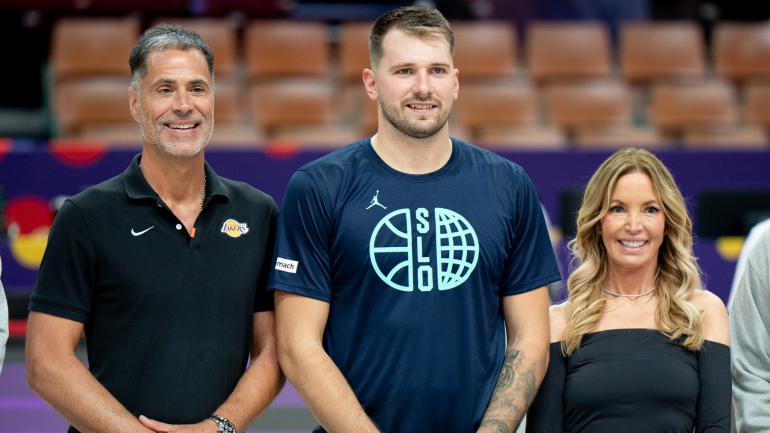
The Lakers built an incomplete team around Luka Dončić, and now face the risk of losing him too

LeBron James, by all accounts, is about to play next season on a substantial discount. All the reporting on his decision to leave the Los Angeles Lakers and pursue free agency has indicated that his next decision will be driven not by money but by his happiness. His family is based in Los Angeles. He’s comfortable there. But the only team he has ruled out to this point in his free agency is the Lakers.

There are many reasons that might be the case, including eight years of pent-up grievances between the two sides. But according to ESPN’s Shams Charania on Wednesday, “LeBron James and the Lakers simply didn’t see eye to eye on what it meant to try to compete for a championship.” This more or less tracks with the statement agent Rich Paul released on James’ behalf last summer when he picked up his $52.6 million player option. “LeBron wants to compete for a championship,” Paul told ESPN a year ago. “He knows the Lakers are building for the future. He understands that, but he values a realistic chance of winning it all.”

James’ roster-building instincts are hardly infallible. He pushed for the Russell Westbrook trade, after all. But it feels notable that the self-proclaimed greatest player of all time, a 41-year-old who has won a championship on every team he has played for and is seemingly pursuing his fifth aggressively enough to take a substantial pay cut, got a whiff of Lakers general manager Rob Pelinka’s plans and seemingly thought to himself, “I don’t think that team can win a championship — even if I’m playing for them.”

On Wednesday, Pelinka’s vision for the Lakers came to fruition. They acquired long-rumored center target Walker Kessler in a stunningly expensive sign-and-trade that handed the Utah Jazz their unprotected first-round picks in 2031 and 2033, along with first-round pick swaps in 2028 and 2030.

Walker Kessler trade grades: Lakers get C+ in massive, albeit necessary, overpay; Jazz play it perfectly
Sam Quinn
Walker Kessler trade grades: Lakers get C+ in massive, albeit necessary, overpay; Jazz play it perfectly
After sending the Jazz their 2027 first-round pick to dump Westbrook back in 2023 and handing the Dallas Mavericks their 2029 first-round pick at the 2025 deadline, the Lakers have more or less exhausted their tradable draft capital. Only a first-round swap in 2032 is available. The cap space they’ve spent the past 18 months hoarding has been allocated. Joining Kessler in Los Angeles are guards Quentin Grimes and Collin Sexton and big man Sandro Mamukelashvili.

The roster isn’t done. They have two open roster spots and minimums to spend. They’ll have to shed a bit of money to squeeze in all of those signings. Maybe there are minor, player-based trades available to them. But this is functionally the team. The Lakers have used up their flexibility.

What do these additions bring to the Lakers?
So what exactly do they have? Oodles of shot-creation, for one. The Lakers have always placed a higher premium on basic points-per-game players than most teams. If nothing else, the additions of Sexton and Grimes offer enough supplemental offense that the Lakers won’t have to run Luka Dončić and Austin Reaves into the ground over the 82-game regular-season grind. Of course… similar logic arguably guided the decision to prioritize Kendrick Nunn and Talen Horton-Tucker over Alex Caruso after the 2020-21 season, and we saw what happened there. In fairness, no Caruso was known to be available to them this summer.

The Lakers have been a low 3-point volume shooting team basically since James arrived, and that has capped their offensive ceiling. JJ Redick, entering his third season as coach, finally has a roster that can let it fly. The ability to play five-out with Mamukelashvili at backup center is going to be torturous to guard. It is also going to create some track meets because Mamukelashvili emphatically cannot protect the rim as the lone big man in any lineup. His offense is still a plus at power forward, but that shooting goes from a superpower to a mere strength.

Kessler is inarguably a better fit at center than Mark Williams (whose trade to the Lakers in February 2025 was rescinded) would have been. This all-in center move nets the Lakers a meaningfully better player than their first attempt at such a trade would have. Of course, the Williams trade, for all of its warts, would have gotten the Lakers a center with a year-and-a-half of cheap team-control baked into his rookie deal, whereas Kessler is coming at market value. That deal would have preserved their 2033 first-round pick for future trades. This one obviously did not. Would you rather have had Williams alongside James 17 months ago, or Kessler without him now?

通过admin

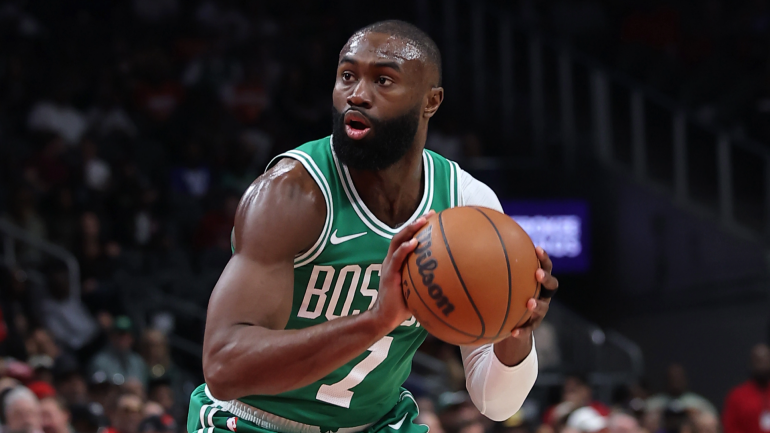
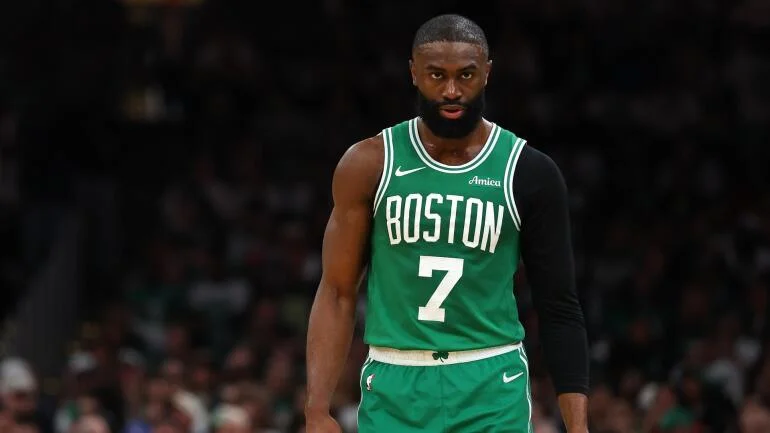
Jaylen Brown trade grades: 76ers get ‘A+’ for landing Celtics star as Boston makes baffling decision

The Boston Celtics are trading Jaylen Brown to the Philadelphia 76ers in exchange for Paul George, two first-round picks (2028 and 2031) and two second-round picks (2028 and 2030), according to ESPN. The 2028 first-rounder could convert from a first to a pick swap that is more favorable to the Celtics, while the 2031 pick is unprotected.

The stunning deal marks the end of Brown’s enormously successful 10-season run in Boston. The No. 3 overall pick in the 2016 NBA Draft made five All-Star teams with the Celtics. He averaged at least 20 points for seven consecutive seasons, took the Celtics to the Eastern Conference Finals six times, the NBA Finals twice, and won Finals MVP as Boston won its 18th NBA championship in 2024. Now, he will continue his career in a rival city alongside a core of Joel Embiid, Tyrese Maxey and VJ Edgecombe.

Brown played alongside Jayson Tatum since Boston drafted the latter in 2017, but rumors about the Celtics splitting up the pair were common for much of their run together. The Celtics were linked to superstars like Anthony Davis and Kevin Durant over the years, but never pulled the trigger on a trade for Brown during his joint ascent with Tatum. The Celtics were rewarded for that faith with the 2024 title, but things slowly broke down from there.

Tatum tore his Achilles during Boston’s title defense in 2025, and he missed most of the 2025-26 season. With Tatum sidelined, Brown had the best statistical season of his career in leading the Celtics to 56 wins, but Boston blew a 3-1 lead and lost Game 7 of its first-round series against the 76ers with Tatum out. That series exposed holes in Boston’s roster that would be hard to address with both Tatum and Brown earning supermax salaries in this enormously restrictive CBA environment.

Brown responded by venting on Twitch after the Celtics were eliminated, claiming the NBA had an agenda against him. Perhaps just as notably, he called this season his “favorite year” of his basketball career rather than the 2024 title season. The Celtics, meanwhile, spent most of June negotiating a trade of Brown to the Milwaukee Bucks for Giannis Antetokounmpo. When Antetokounmpo was ultimately dealt to the Miami Heat, Boston elected to move on from Brown anyway, sending him to Philadelphia in a shocker.

For much of the past two years, Philadelphia’s destiny was tied to two aging and injury-prone players. George has played just 78 regular-season games over two seasons with the 76ers, and he is entering his age-36 season. Coupled with the frequent absences of Embiid, Philadelphia appeared to be stuck with two supermax contracts that were aging badly.

But George, following a 25-game suspension, returned to finish out the season strong. He averaged an efficient 17.4 points per game in the playoff series win over the Celtics, and now, he’s headed to Boston to serve as their Brown replacement. With Brown only 29 years old, the 76ers have improved at the forward spot with a player six years younger than the one that they sent out.

Now, if Embiid can only stay healthy, the 76ers have a real path to genuine championship contention in a crowded Eastern Conference. Let’s grade the trade.

team logo
Philadelphia 76ers: A+
Landing Brown while moving off George’s contract? An outright steal
When I ranked the worst contracts in the NBA in March, George, making supermax money ($54.1 million) for the next two seasons, ranked No. 5. At the time, that was a fairly common sentiment. He was out at that point due to a 25-game PED suspension, but even before that, he was inefficiently averaging a pretty modest 16.2 points per game and had far less defensive impact than at his peak. A good player, but a severely overpaid one whose 36th birthday was looming. The assumption was that Philadelphia would have to attach draft capital to move off of his contract.

What changed after that? He returned from that suspension and played 10 nearly star-level regular-season games. He was fantastic in the playoffs, making nearly half of his 3-pointers and turning back the defensive clock against the Celtics. Essentially, in 21 games, George went from immovable to the only player involved in a trade for Brown. For a brief, fleeting moment, another team considered George to be a positive-value asset, or at least not so overwhelmingly negative that he would impede a trade like this. Was it just shooting variance? Did the 25-game rest revive him? It just seems hard to imagine that a 36-year-old could turn the clock back like that in any sort of permanent way.

Brown is coming off a Second-Team All-NBA season. There is a credible reason to believe that the season was fool’s gold. Brown shot just under 51% on mid-range shots and just under 71% on restricted area shots from October through December. That’s around the point at which some people tried to nudge him into an MVP conversation he really never should have been a part of. After Jan. 1, he fell back down to earth, falling to around 41% on mid-range jumpers and 69% in the restricted area. He is not, in fact, a Kevin Durant-level individual scorer. But the 76ers did not pay a Durant-level price.

通过admin

How did Celtics, Jaylen Brown get here? Trade to 76ers caps off stunning deterioration of relationship

Three months ago, Jaylen Brown was finishing off his best season as a pro, averaging 28.7 points per game and taking a leap from All-Star to All-NBA player in Jayson Tatum’s absence while leading the Boston Celtics to the East’s No. 2 seed in what most projected to be a gap year.

Now, Brown is reportedly a member of the rival Philadelphia 76ers after a shocking trade on Wednesday that sent Brown to Philly in exchange for Paul George, two first-round picks and two second-round picks. After a decade in Boston that included 10 trips to the playoffs, five All-Star appearances and a championship, it was stunning to see the Celtics so frantic in trying to unload Brown. That they ultimately took back a package with just two first-round picks — after reports indicated they were asking for four as recently as a week ago — and George coming off his two worst seasons in more than a decade is almost unbelievable.

Where most trades involving star talent include some level of player involvement at this point, ESPN’s Brian Windhorst reported earlier in the week that he’d heard team president Brad Stevens and the Celtics were offering Brown “everywhere.” That was corroborated by ESPN’s Shams Charania’s note after the trade that Boston had been “full-blown shopping” Brown around the league over the past week. That doesn’t happen if there’s a salvageable relationship between player and franchise.

Jaylen Brown trade grades: 76ers get ‘A+’ for landing Celtics star as Boston makes baffling decision
Sam Quinn
Jaylen Brown trade grades: 76ers get ‘A+’ for landing Celtics star as Boston makes baffling decision
Everything about this felt out of character for the way the Celtics have operated for the last decade. Every move Stevens made felt surgical, but Brown’s trade was the opposite. After years of rarely making so much as a minor misstep, to have the team’s relationship with Brown completely implode to the point of a hurried trade just to get him out is almost disorienting.

How the relationship between the Celtics and Brown got to this point is a question that will be steadily unpacked all summer. Plenty of behind-the-scenes revelations will surface in the coming weeks and months, offering further insight. But with this trade, it’s abundantly clear that things had reached a breaking point with a rift that could not be bridged.

So, how did we get here? That’s a complicated question that goes back almost to the beginning, but escalated rapidly over the past few months.

The relationship between Jaylen Brown, Jayson Tatum
A year after Brown was drafted third overall by the Celtics in the 2016 NBA Draft, they added another young star wing by selecting Tatum at No. 3 in 2017. “The Jays” enjoyed immediate success, but as their stars grew, so did the chatter questioning whether they would co-exist given their respective desires to be the top star.

Both Brown and Tatum publicly dismissed any internal animosity over the years, but as Tatum emerged as the Celtics’ leading man in recent years, many wondered how much it irked Brown to be viewed as the Robin to Tatum’s Batman. As the Celtics fell short of a championship in the first six years of their partnership, there were constant questions about whether they were the right pairing or if their overlapping skill sets would be better served on separate teams.